Best Language Learning Apps for Beginners (2026)
Last updated: July 2026
Reading time: 8–10 minutes
Learn a New Language Faster with the Right App
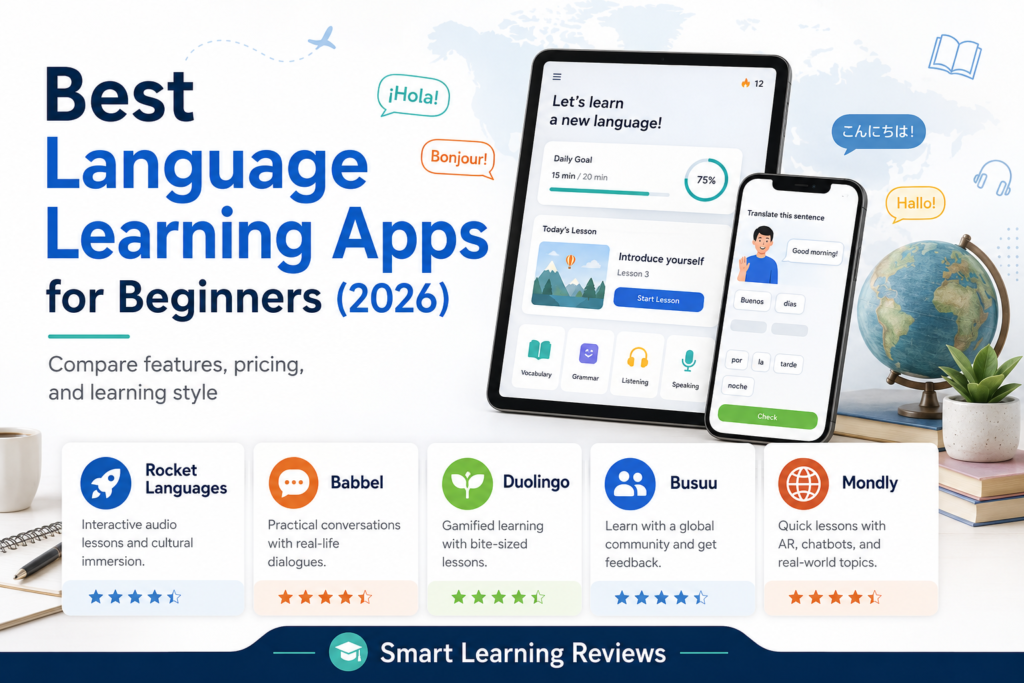
Starting a new language can feel overwhelming. With hundreds of language learning apps available today, it’s difficult to know which one is actually worth your time and money.
Some apps focus on vocabulary through short daily lessons. Others emphasize real conversations, pronunciation, grammar, or immersive learning experiences.
The good news is that there isn’t one perfect app for everyone.
The best choice depends on your goals, your learning style, and the amount of time you can dedicate each day.
In this guide, we’ve carefully compared some of the most popular language learning platforms to help beginners choose confidently.
Whether you’re learning for travel, work, study, or personal growth, you’ll find an option that fits your needs.
Quick Recommendation
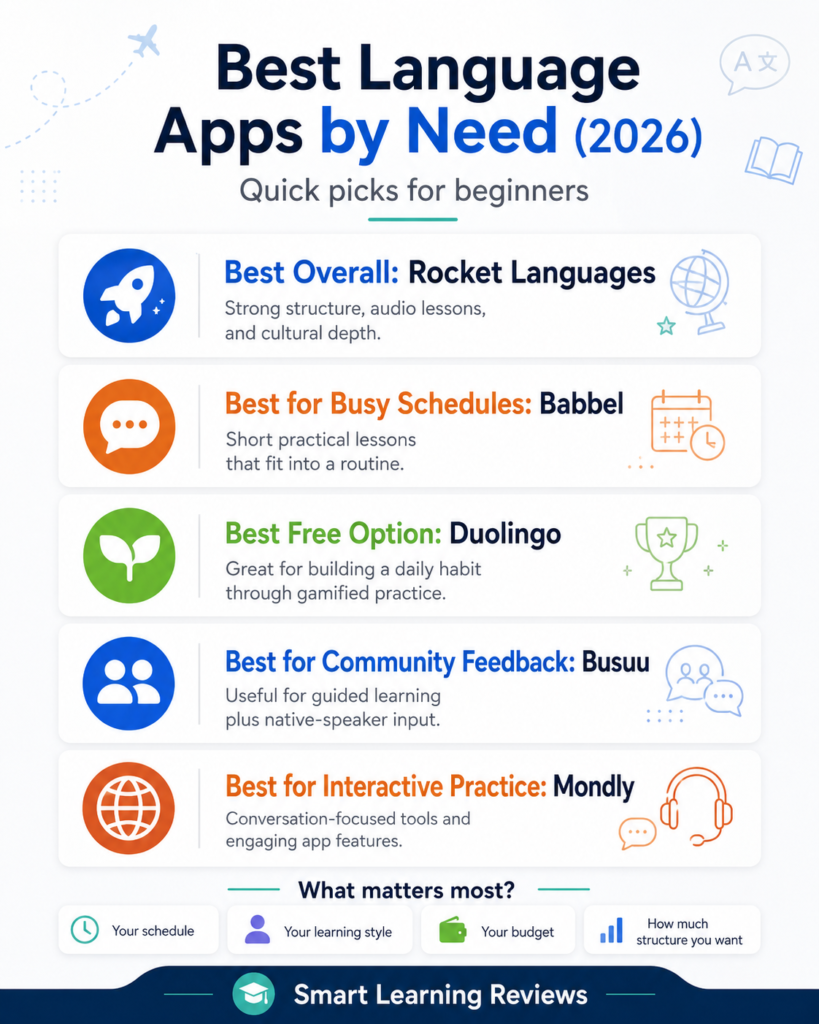
If you’re looking for the best all-around language learning app for beginners, Rocket Languages is our top recommendation thanks to its complete lessons, excellent speaking practice, and structured learning path.
If you prefer shorter, conversation-focused lessons, Babbel is an excellent alternative.
Why trust Smart Learning Reviews
At Smart Learning Reviews, we publish independent reviews and detailed comparisons to help readers make informed decisions.
Our evaluations focus on:
- Learning methodology
- Ease of use
- Lesson quality
- Value for money
- Beginner friendliness
- Speaking practice
- Long-term learning potential
We also continue updating our content as platforms introduce new features.
Our goal is simple:
Help you choose the language learning platform that best matches your personal goals.
Quick comparison
Not sure which platform to choose?
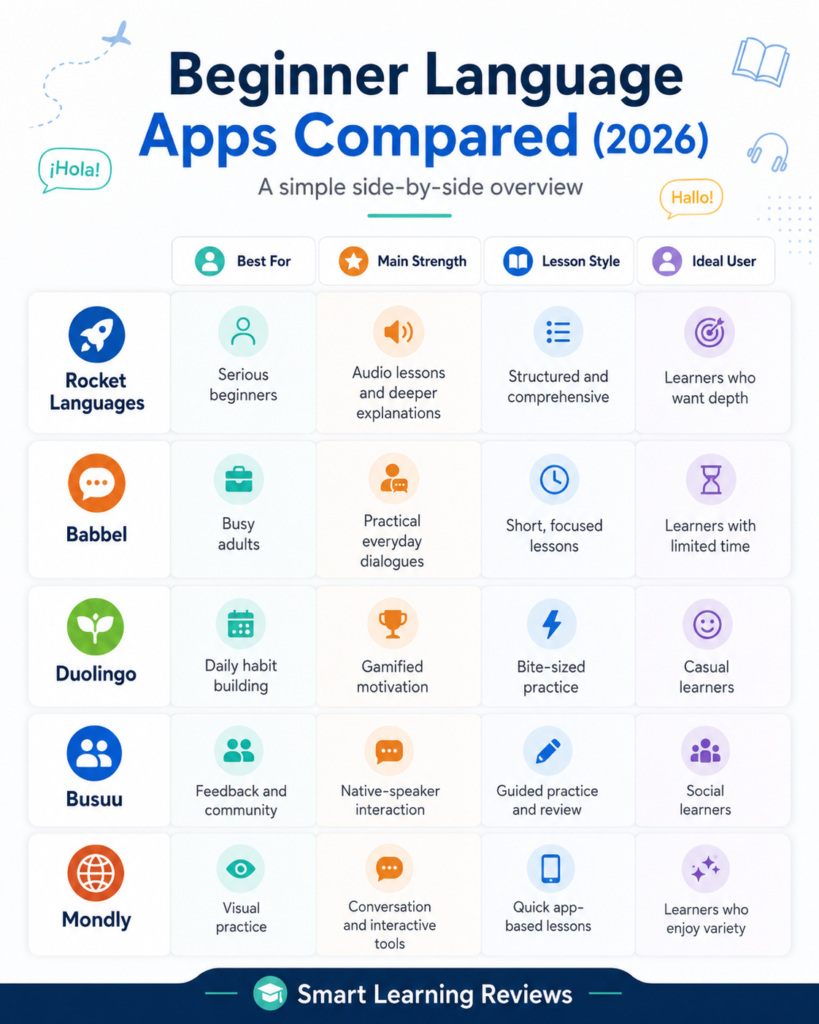
Here’s a quick overview of the most popular language learning apps and what each one does best.
🚀 Rocket Languages
Best for: Serious learners who want long-term fluency
Difficulty: Easy
Speaking Practice: ⭐⭐⭐⭐⭐
Grammar: ⭐⭐⭐⭐⭐
Offline Access: Yes
Overall Rating: ⭐⭐⭐⭐⭐
👉 Best choice for learners looking for a complete language course.
💬 Babbel
Best for: Everyday conversations
Difficulty: Easy
Speaking Practice: ⭐⭐⭐⭐☆
Grammar: ⭐⭐⭐⭐☆
Offline Access: Yes
Overall Rating: ⭐⭐⭐⭐☆
👉 Ideal for adults who want practical language skills.
🎯 Duolingo
Best for: Free daily practice
Difficulty: Very Easy
Speaking Practice: ⭐⭐⭐☆☆
Grammar: ⭐⭐⭐☆☆
Offline Access: Limited
Overall Rating: ⭐⭐⭐⭐☆
👉 Great for building a daily learning habit.
🌍 Busuu
Best for: Community learning
Difficulty: Easy
Speaking Practice: ⭐⭐⭐⭐☆
Grammar: ⭐⭐⭐⭐☆
Offline Access: Premium only
Overall Rating: ⭐⭐⭐⭐☆
👉 Excellent if you enjoy receiving feedback from native speakers.
📚 Mondly
Best for: Interactive learning
Difficulty: Easy
Speaking Practice: ⭐⭐⭐⭐☆
Grammar: ⭐⭐⭐☆☆
Offline Access: Yes
Overall Rating: ⭐⭐⭐⭐☆
👉 A fun option for visual learners who enjoy interactive lessons.
1. Rocket Languages
Best Overall for Serious Beginners
Rocket Languages offers one of the most complete language learning systems available today.
Instead of relying only on flashcards or simple vocabulary games, Rocket combines:
- Audio conversations
- Grammar explanations
- Pronunciation feedback
- Interactive exercises
- Listening practice
- Cultural lessons
This combination helps learners build real communication skills from the beginning.
Pros
✔ Excellent speaking practice
✔ Very complete lessons
✔ Offline access
✔ Lifetime purchase available
✔ Strong grammar explanations
Cons
✘ Higher initial investment
✘ Lessons are longer than gamified apps
Best For
Learners who want real fluency rather than just memorizing words.
2. Babbel
Best for Practical Conversations
Babbel is designed by language experts and focuses on real-life situations.
Lessons are short, engaging, and ideal for busy adults.
The platform gradually introduces grammar while emphasizing useful conversations.
Pros
✔ Short lessons
✔ Excellent interface
✔ Great beginner progression
✔ High-quality dialogues
Cons
✘ Fewer languages than some competitors
✘ Subscription required
Best For
Adults learning a language for travel, work, or everyday communication.
3. Duolingo
Best Free Language Learning App
Duolingo remains one of the most downloaded educational apps worldwide.
Its game-like design makes daily practice enjoyable.
Although it’s excellent for building habits, many learners eventually need additional resources to develop conversation skills.
Pros
✔ Free version available
✔ Highly motivating
✔ Daily streak system
✔ Fun lessons
Cons
✘ Limited speaking practice
✘ Grammar explanations are brief
Best For
People starting a language with no previous experience.
4. Busuu
Best Community Learning Experience
Busuu combines structured lessons with feedback from native speakers.
Learners can submit exercises and receive corrections from the community.
Pros
✔ Native speaker corrections
✔ Personalized study plans
✔ CEFR-aligned curriculum
Cons
✘ Some features require Premium
Best For
Students who value feedback from real people.
5. Mondly
Best Interactive Experience
Mondly offers engaging lessons using speech recognition and interactive exercises.
Its visual interface makes learning enjoyable for beginners.
Pros
✔ Beautiful interface
✔ Good pronunciation practice
✔ Large number of languages
Cons
✘ Less in-depth grammar
Best For
Visual learners who enjoy interactive lessons.
Which App Is Right for You?
Different learners have different goals.
Choose Rocket Languages if:
- You want long-term fluency.
- You enjoy complete lessons.
- Speaking confidently is your priority.
Choose Babbel if:
- You want practical conversations.
- You prefer short lessons.
- You’re learning for travel or work.
Choose Duolingo if:
- You’re just getting started.
- You want a free option.
- Motivation through daily streaks keeps you consistent.
Choose Busuu if:
- You appreciate community feedback.
- You enjoy structured learning.
Choose Mondly if:
- You like visual learning.
- Interactive technology keeps you engaged.
How to Choose the Best Language Learning App
Before purchasing any language course, ask yourself:
- Why am I learning this language?
- How much time can I study each day?
- Do I prefer structured lessons or games?
- Is speaking my biggest priority?
- What’s my budget?
Answering these questions will make your decision much easier.
Ready to Start Learning?
Choosing the right language app is the first step toward becoming fluent.
Explore our detailed reviews to compare features, pricing, and learning methods before making your decision.
Frequently Asked Questions
Which language learning app is best for complete beginners?
Rocket Languages, Babbel, and Duolingo are excellent options for beginners, depending on your goals and preferred learning style.
Is Rocket Languages worth it?
Yes. Rocket Languages is one of the most comprehensive language learning platforms available, especially for learners seeking long-term fluency.
Is Babbel better than Duolingo?
Babbel generally provides more structured lessons and practical conversations, while Duolingo focuses on habit-building and gamified practice.
Can I become fluent using only an app?
Language apps are powerful learning tools, but true fluency usually requires additional speaking practice, listening, reading, and real-world communication.
How long does it take to learn a new language?
The timeline depends on the language, study consistency, and your learning goals. Daily practice is one of the biggest factors influencing progress.
Final Thoughts
The best language learning app is the one you’ll actually use consistently.
While every platform has strengths, beginners generally benefit from choosing a structured course that develops vocabulary, grammar, listening, and speaking together.
If your goal is long-term fluency, Rocket Languages stands out as one of the strongest choices available.
If you prefer shorter lessons with practical conversations, Babbel is an excellent alternative.
Whatever you choose, remember that consistency matters far more than perfection.
Even 15 to 20 minutes of focused study each day can lead to remarkable progress over time.
Explore More Language Learning Guides
Continue your research with our in-depth reviews and comparisons:
Explore our latest guides to find the platform that best matches your learning style and language goals.
At Smart Learning Reviews, we’re committed to helping you choose language learning platforms with confidence through honest reviews, practical comparisons, and regularly updated guides. Keep exploring our resources and find the learning method that works best for you.